
Remember that feeling when you finally achieved a new level on Duolingo or another favorite app? You couldn’t stop learning and playing every day. That’s a good example of the power of loyalty apps. Whether it be your corner coffee shop or your favorite place to eat, these apps aren’t about rewards; they build customer relationships that last.
This is not a situation that I might have gone through only, assuming this, most of them have to counter this.
And the fun fact is that more than 90% of companies now have some form of loyalty program. Google any brand along with the words “loyalty program”, “rewards program”, or “membership”, and 9 times out of 10 you’ll get a hit.
McDonald’s, Amazon, Walmart, Disney, Target, Best Buy, Nike, Adidas- the list just goes on and on.
That means investing in loyalty app development is a great deal. But at the same time, how much it will cost to build such a mobile app?
Let’s have an insight into that only
The Basics of Loyalty App Development
Before looking at the cost, let’s look at what exactly is involved in the creation of a loyalty app. In simple terms, loyalty apps are those that help an organization thank customers for continuing to buy their products or services. They may be in the form of discounts, special offers, or points redeemable at a later date.
These are not just digital punch cards anymore; they are sophisticated platforms that meld customer engagement with data analytics to create meaningful interactions.
Be it an in-business loyalty card app or a customer rewards program application, any successful loyalty app needs a well-planned strategy. Gamification features may be thought about. Besides, social sharing, and personalized rewards-which, actually, can increase the rates of customer retention.
Loyalty Program Application Market Statistics
The global loyalty market will grow from $135.9 billion in 2023 to $214.7 billion by 2028, at an average annual growth rate of 9.2%.
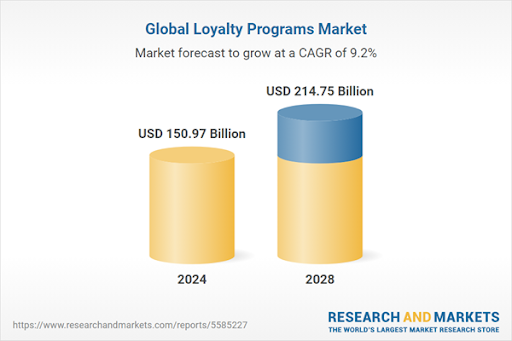
This shows that more businesses than ever are recognizing the value of digital loyalty apps as powerful tools for customer retention (supported by an AI phone call agent like Brilo AI). In a digital world where competition is fierce, loyalty programs help brands stand out by offering customers real value.
With so many benefits, it’s no wonder businesses across industries are eager to invest in loyalty app development.
Key Features of Customer Loyalty Application
Here is a list of the key features that loyalty apps usually have:
| Feature | Description |
| Personalized Offers | Tailored discounts, promotions, and recommendations based on customer preferences and purchase history. |
| Gamification | Incorporate game-like elements such as challenges, badges, and leaderboards to motivate user engagement. |
| Referral Programs | Encourage customers to refer friends and family by offering incentives. |
| Mobile Payments | Allow customers to pay for goods and services directly through the app. |
| Loyalty Tiers | Create tiered loyalty programs to reward customers based on their spending and engagement levels. |
| Customer Surveys and Feedback | Gather valuable feedback from customers to improve products, services, and customer experience. |
| Push Notifications | Send timely notifications about promotions, rewards, and personalized offers. |
| Social Media Integration | Allow users to share their loyalty status and rewards on social media. |
| Multi-Channel Access | Ensure the app is accessible across various devices, including smartphones and tablets. |
| AI-Powered Recommendations | Utilize AI algorithms to analyze customer data and provide personalized recommendations. |
How Much Does it Cost to Develop a Loyalty App?
The big question comes next: how much does loyalty app development cost? Actually, quite different, considering that it depends on a number of factors.
Key factors that will further determine this estimate include the complexity of the app, the selected platform, the number of features, the experience of your development team, and much more.
Moreover, let’s have a brief discussion of some important ones-
The Cost Components in Loyalty App Development
1. Initial Design and Development
First, there is design and development. In other words, creation of the user interface and general look of your loyalty card app. The cost difference between a fully custom solution and a basic template depends on your choice.
The cost of fully customized apps is higher. However, in the case of Flutter loyalty app development, they might bring the cost down as with a single code base, you can deploy the app on both iOS and Android platforms. However, the Indian app builders for hire can assist you in creating a seamless and cost-effective loyalty app.
2. Backend Infrastructure
Then, there is the backend infrastructure: where the wholesome essential stuff happens in terms of data storage, user account management, and tracking rewards earned. Efficient customer loyalty application contributes to seamless operations and even be one of the cost-influencing factors.
3. Features and Functionalities
Features play a crucial role in defining the cost. The cost will be much lower for basic features, such as a loyalty card app for businesses. Advanced functionalities, which include real-time analytics or gamification elements, raise the costs. A fully featured loyalty rewards app with these kinds of capabilities tends to be more costly at the front end but offers considerably better value.
4. Testing and Launch
Nobody likes a glitchy application, right? Testing ensures that everything goes on an even keel before the big launch. This phase is quite relevant, and the proper investment herein may save lots of headaches in the future. A no-testing loyalty program app development process will eventually lead to poor user experiences.
5. Marketing and Customer Engagement
Even the best applications need an effective marketing plan. Be it a restaurant loyalty app or a digital loyalty app, reaching your audience is a major concern. Consider the cost of promotional campaigns and user acquisition strategies.
6. Maintenance and Updates
In addition is the ongoing cost associated with maintaining the app and rolling out updates. Technology changes fast, so keeping your app up-to-date is going to be pertinent to longevity. Regular updates ensure that your loyalty app for small businesses remains competitive and keeps pace with customer expectations.
Estimating the Total Cost
What is the bottom line now? It can take an average of building a basic loyalty app, starting from $10,000 up to $50,000, while advanced customer rewards apps are upwards of $100,000.
Steps to Develop a Loyalty Program Application
As several businesses look for strategic ways to retain their customers, well-designed loyalty applications definitely help you outshine your competitors. Now, how shall one get started? Worry not! I’m here to run you through how to develop a loyalty mobile application. Let’s dive in!
1. Define Your Objectives
Ask yourself: what do you want your loyalty program to achieve? Maybe you want to raise customer retention, increase sales, or collect valuable customer data. Whatever your goal is, you need to have an objective.
Why? Because it drives every other decision that you will have to make in the process of development. Have proper research of your niche, as different industries have unique requirements when it comes to loyalty apps. For instance:
- Restaurant Loyalty App: These apps often include features like reservation systems, order tracking, and special offers for frequent diners.
- Retail Loyalty Apps: These can offer personalized shopping experiences, exclusive deals, and even virtual try-ons for fashion retailers.
- Service Industry Loyalty Apps: From salons to auto repair shops, these apps can offer appointment scheduling, loyalty points, and exclusive member discounts.
2. Know Your Audience
Knowing about your customers is important; study them through surveys or based on any existing data about their buying habits and what they expect from the loyalty scheme. Whether it is discounts, special products, or access to a sale before others, knowing this will help mold your program to meet their expectations and keep them involved.
3. Choose the Right Loyalty Program
Once your objectives and audiences are known, the time is right to choose a loyalty program: point-based, tiered, subscription-based, or maybe something else.
The advantages and disadvantages exist in all of them. For instance, point-based systems are easy for customers to understand, while tiered can spur more spending because higher rewards are to be given based on the tier they stand.
Types of Loyalty Programs
When discussing loyalty app development, it’s essential to understand the different types of loyalty programs available:
- Points-Based Programs: Customers earn points for every purchase, which they can redeem for rewards. It’s straightforward and very popular.
- Tiered Programs: The more customers spend, the higher they climb in membership tiers, unlocking exclusive rewards.
- Paid Membership Programs: Customers pay a fee to join and receive exclusive perks.
- Cashback Programs: Customers receive a percentage of their purchase amount back as cash.
- Coalition Programs: Multiple businesses join together to offer rewards that can be redeemed across all participating companies.
Think of what can work best with the nature of your brand and the behavior of your customers.
4. Design the User Experience
Now, when it comes to UX, that is well, making the loyalty app easy and nice to use. You want your customers to feel good using your app, right?
All-of-all, the design should be intuitive to understand and pleasing to the eyes. Simple navigation, clear instructions, and fast loading time-that is what every user wants. Besides, featuring push notifications allows to keep users engaged by reminding them about points or rewards available to them.
5. Technology Development
Now, the technical part! You will need a proper loyalty mobile app development team that can shape your vision. Depending on your budget, you might go for a custom app or a white-label solution.
A custom loyalty app gives you more flexibility and uniqueness in branding, while a white-label one can be quicker and way more affordable to go live. Also, don’t forget to integrate the app with your legacy systems for smooth operation, like CRM and point-of-sale systems.
6. Ensure Data Security
In today’s world, the security of data is primary, right? Your application will deal with some sensitive customer data; hence, proper security needs to be put in place.
This includes encryption, securing APIs, and following protection laws on data. Customers have got to have confidence that information about them is safe with you.
7. Test and Iterate
Test your app well before its release. Do user testing on what works and what doesn’t work. Is the loyalty application friendly to use? Are there bugs? Take feedback, and then improve. Remember, better now than after the app goes live, right?
8. Launch and Promote
When everything is set, it’s time to bring your loyalty app to the market. However, launching is merely the beginning. You will have to promote your loyalty program for onboarding customers.
Use social media, email marketing with an unsubscribe from email option, and in-store promotions to spread the word. You can also provide introductory bonuses or introductory discounts to motivate people to download the app and use it.
9. Monitoring and Improvement
Finally, make sure to monitor how your app is performing. Use analytics to track user engagement, redemption rates, and overall satisfaction. Are users engaging with the app? Are rewards being redeemed?
The data will help you identify what needs to be developed further. Refine your app and the program repeatedly for better service of customers and to reach your goals.
Why Build a Loyalty App?
Indeed, this hypercompetitive market requires businesses to do more than just sell quality products or services; they need to connect with customers.
And thus, the well-crafted loyalty app will work wonders for just this. It will offer value, personalization, and convenience to customers. In the end, all these will be channeled into forging long-term relationships.
Let me elaborate on these key business advantages of loyalty app development in detail:
1. Improved Customer Retention
Studies indicate that a company can increase profits up to 25% to 95% if it increases the customer retention rate by 5%.
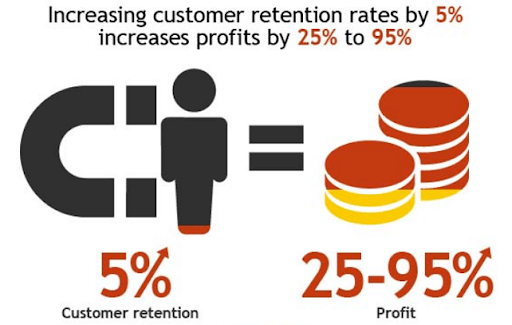
It denotes how well a brand retains its existing customers over time. But how to make it possible?
One wise step could be the loyalty program app. A loyalty app motivates customers to make repeat purchases by rewarding them for continued patronage. For example, with points, cashback, or special offers, customers feel special and want to come back for more.
It gives your customers a reason to stay. The best thing is that every interaction with such an app increases their affinity towards the brand.
Therefore, building a loyalty app is one surefire way to help firms achieve this by keeping the interest of customers and engaging them for an extended period of time.
2. Increased Customer Spending
Of course, it makes a lot of sense for profitability that businesses would want to increase the amount each customer spends, what’s commonly referred to as “customer lifetime value” or CLTV. It simply often costs more to gain a new customer than to retain an older one.
The loyalty apps-incentivize spending by offering rewards for certain actions, like making a purchase, repeated purchases, or attaining benchmarks in spending. This “spend-to-earn” approach provides an incentive for customers to spend even more in the hopes of unlocking rewards.
Studies have shown that loyal customers spend as much as 67% more on products or services than new customers. A loyalty app helps in strategically setting up rewards and milestones so as to grow casual shoppers into dedicated buyers who, over time, invest more in your brand.
3. Personalized Customer Experience
Personalization is an element of today’s customer expectations; they want the brands to know their likes, their dislikes, and actually provide experiences with that in mind. Personalization evokes a feeling of exclusivity where the customer feels that a brand understands them and values their patronage.
It can also collect data on customer behavior, preferences, and buying habits through the loyalty app by having AI and machine learning integration. You will then be able to tailor your rewards, recommendations, and promotions with the help of such data.
For example, a customer who frequently buys fitness gear could get special discounts for similar products, or an app might suggest rewards based on previous purchases.
In fact, it is said that 80% of consumers are more likely to make a purchase when brands offer personalized experiences.
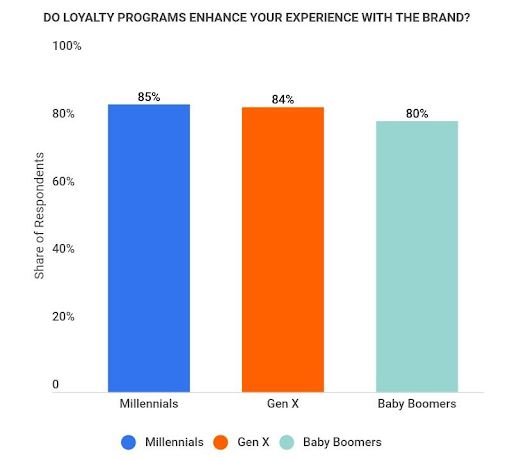
It helps facilitate this by providing the data that will be needed for enabling personalization thanks to the loyalty app.
4. Rich Customer Insights
The loyalty app can track everything from customer purchasing patterns and browser behavior to how customers use their apps and what kind of rewards they use.
Through the analysis of this information, one learns what customers want, what products or services are most popular, and what type of rewards keep them coming back.
This would provide them with an upper level of the customers’ needs, which in turn can affect data-driven decisions toward customer satisfaction and driving revenue.
If, for instance, the data indicates a higher point of engagement in discounts, as compared to the accumulation of points, then the business can make necessary adjustments. The insights accrued from a loyalty app can make marketing even more targeted and effective.
5. Better Customer Communication
The loyalty application opens up direct lines of communication with the user via push notifications, in-app messages, and e-mails.
This is how you will be able to inform customers immediately about:
- Sales to come
- Events where exclusive discounts will be given
- The possibility of losing some of their loyalty points
Everything else serves the purpose of calling users to action in using the application.
It fosters a consistent flow of information whereby it supports richer brand trust because it keeps customers well-informed and integrated into the brand.
It also enables real-time customer information to perform an action through redeeming points, making a purchase, or taking part in an event promotion.
6. Competitive Advantage
A unique and captivating loyalty program is one differentiator that offers a distinction to your brand from that of competitors.
A well-designed loyalty application, complete with unique features and rewarding rewards, would make clients want to go for your brand rather than others.
An example of such would be the gamification features: the streaks common in Duolingo indeed create more fun, interactive experiences that will grow customer loyalty more than any discount promotions could hope to accomplish.
The most successful loyalty apps succeed in attaining higher customers, both in engagement and retention, even for the most competitive business sectors. That gives your business just that competitive edge.
7. Higher Return on Investment for Marketing
A loyalty app provides a channel for any business to reach out to customers-who are much easier and more cost-effective to convert and acquire compared to new customers-offering them targeted offers, exclusive promotions, and personalized messaging. This ultimately is cost-effective compared to traditional ad targeting, aiming at customers who already like a brand.
It is proven that loyalty members are more likely to respond better with marketing and become brand advocates. Spending resources, energy, and cash on retaining loyal customers guarantees that a business will get the best bang for its buck when it comes to use of marketing budget and receive a higher ROI.
Final Thoughts
The loyalty program app will give a personalized experience to the customers, and actually a company can deepen their relationship with the customer, improve revenue growth, and enhance customer satisfaction.
Surely it is worth taking the journey, don’t you think?
Though the initial upfront cost seems a bit daunting, the long-term benefits very often outweigh the investment. Be it small businesses or large enterprises, the right loyalty app can help you rethink customer interaction and drive growth.
In other words, it is not just an application; it is customer loyalty system software to which your audience will relate and it will be connected to the core values of your brand. So, loyalty app development is a wise step for a lot of businesses. Here, you saw detailed information required to build a successful loyalty app, including the cost of development, the process to create it, and the benefits it offers.
If you are interested in such a venture then connect with the best app development company in India to give life to your loyalty program.

Dalina Scott
Dalina Scott is a key player in the marketing team at iWebServices. With a sharp mind for strategy and a talent for crafting compelling narratives, Dalina ensures that our content not only engages our audience but also drives significant value. Her dedication to staying ahead of industry trends and her keen analytical skills make her an invaluable asset to our team. When she’s not developing innovative content strategies, Dalina enjoys sharing her knowledge and insights through our blog, helping readers understand the nuances of effective content marketing.