
Are you curious to know the cost of developing a home service app like TaskRabbit? Creating an application that connects users with service providers performing cleaning, plumbing, furniture assembly, and many other tasks involves several factors which determine the general cost.
The factors include app features, design, choice of platform, and technology stack. Today, we are going to break down all the key elements that comprise development cost so that you may have an idea of what goes into building such an app and what you should expect in terms of investment.
We will also see how iWebServices can make it possible to have an app like TaskRabbit. So, without further ado, let’s begin.
The Expected Growth of Home Service Apps
Undoubtedly, the popularity of home service apps like TaskRabbit is quite high even now. However, it’s going to increase even more in the coming years. Don’t believe it? Well, have a look at these statistics:
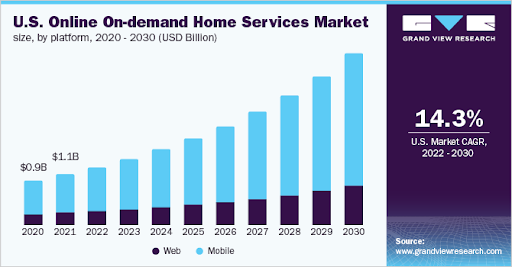
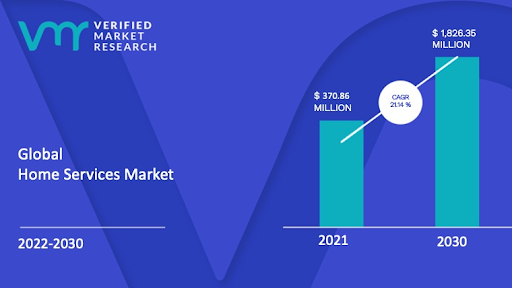
- The worldwide home services market size is predicted to expand by 18.91% per year from 2019-2026. Though several providers encountered hardships during COVID-19, the domain has since recovered.
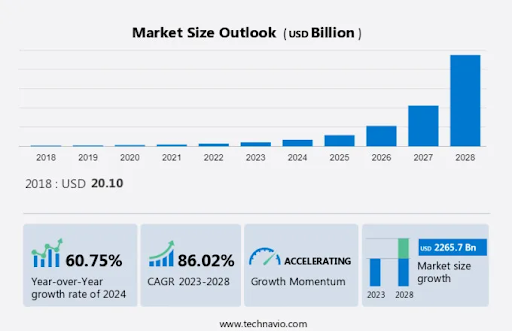
- The Southeast Asia Online Home Services Market size is calculated to grow by USD 2,265.7B at a CAGR of 86.02 percent from 2023 to 2028.
What is a Home Service App?
A Home Service App is a mobile or web application that connects a consumer to professionals or service providers for various in-home services. Its main services include cleaning, plumbing, electrical repairs, home maintenance, furniture assembly, and pest control, among others.
Think of TaskRabbit, Handy, and Thumbtack-they act as intermediaries between users and service providers, allowing customers to book professionals to do a particular job in a few taps on their screen.
Why You Should Build a Home Service App: 5 Key Benefits
Given the statistics above, we now know that demand for a home service application such as TaskRabbit is rising. Let’s take it a step further and discover some of the key benefits such an application can bring to your business so that you decision to hire mobile app developers in India becomes firmer:
1. Growing Market Demand
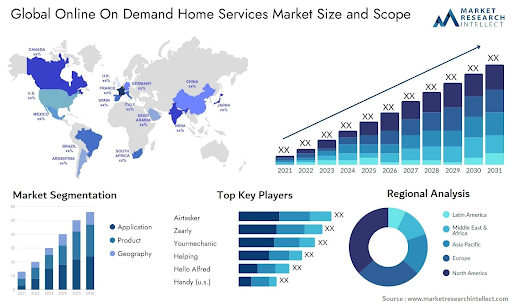
The demand for home services is increasing due to busy lives, working professionals, and the increasing need for convenience. Home service apps satisfy the growing demand for on-demand, reliable, and vetted professionals for everyday tasks, and this trend will only grow as consumers increasingly turn to mobile platforms for ease of access.
Benefit: By developing a home service app, your business catches up with a huge and growing market; people prefer booking services through the applications since they are not only instantly available but also come with price transparency.
2. Convenience and Ease of Use
Convenience is what the home service app provides to users in a completely new dimension. A customer can find a service provider, check availability, see reviews, and make a payment, all from a single source. In addition, the geolocation feature facilitates viewing nearby professionals, and the booking system simplifies the actual scheduling process.
Benefit: The simpler it is for your consumers to utilize the app, the more probable they are to come back and then suggest it. What convinces customers is the simplicity of convenience that amounts to customer satisfaction, which is a great deal in determining the success of an app.
3. Multiple Revenue Streams
Home service apps open up multiple revenue streams for your business. You could charge a commission from service providers, charge premium services both for the customers and the professionals, or even charge subscription fees for accessing some premium features.
Benefit: This diverse revenue model helps to reduce dependence on a single source of revenue that might have otherwise led to being profitable only in limited instances over time.
4. Scalability and Flexibility
A home service app will always scale with your growing business. Start out by tapping one city or region and then scale across the country and even the world if necessary, as the structure allows for scaling up a user base, number of service categories covered, or even geographic coverage.
Benefit: This means that a scalable model lets you increase your market presence without changing the app’s core functionalities significantly. Further, with an increase in demand, you can add more features and capabilities to serve the needs of the users.
5. Brand Building and Customer Loyalty
With a home service app, a strong brand identity can be created emphasizing quality, trust, and reliability. For instance, providing the option of user reviews and ratings while at the same time ensuring full transparency in terms of pricing helps establish a sense of trust with users. Customer loyalty programs, special deals, and top-of-the-line providers also do the same for the user.
Benefit: Customer loyalty will yield repeat business, word-of-mouth referrals, and lower marketing costs. That means steady revenue through your app.
What Features You Should Add to Make Your Home Service App Successful?
Here are some key features that can make your home service app unique:
1. Marketplace
The feature allows customers to browse and choose among varied categories of home services. This, therefore, enables the feature to help them find local service providers, compare alternatives, and make informed decisions by consulting the descriptions of services, their availability, and ratings. Hence an unrivaled shopping experience.
2.View, Reviews and Ratings
This feature enables a client to rate and comment about the service providers based on their experiences. Further decisions can then be made concerning usage, and they gain insight into the service provider for improvement. Good reviews increase their credibility; negative ones raise areas where services can be improved.
3. Booking
It allows ease in service booking. Users can select their preferred time slots, check the availability of service providers, and even confirm bookings in real-time, so it will be easy and headache-free for consumers to get home services without any hassle of dialing phone calls or back-and-forth conversations.
4. In-app payment
The facility of in-application payments would allow customers to pay for services through the application with ease other than through methods of credit cards, mobile wallets, and bank account transfers, thereby ensuring to an unprecedented degree a cashless smooth transaction and assurance of safety and ease for both user and service providers as well.
5. Reservation History
Booking history keeps all past bookings that have been made by the user, including dates, costs, and other service provider details. It also tracks payments and jobs completed because the user can refer to services done previously, rebook if due, and so on.
6. Service Invoice
The Service Invoice feature will automatically generate a detailed invoice upon completion of the service. Charges, taxes, and any applicable discounts to the user’s account will be included to make this more transparent in terms of costs. For added convenience, the invoices can even be downloaded or mailed directly for later access and reference.
7. In-App Chat
App in-app chat enables direct customer access to the service provider. At this stage, the user may have a question or discuss issues that require clarification for ease of resolution of issues without being sent out of the app. In this respect, coordination and clarity before, during, and after completing the service will be much improved.
8. Push Notifications
Push notifications remind customers constantly about important events like confirmed new bookings, reminders, promotions, and offers. It keeps the customer and service provider up-to-date in real-time and, in return, enables maximum engagement meanwhile tracking scheduled services or up-and-coming tasks.
9. Share App
This can allow users to refer others by sharing their referral link or even sharing the application on other social networking sites, which would definitely increase the user base. This can be possible by offering a discount or credit value based on the successful referrals provided by the users.
What Factors Impact the Cost of a Home Service App like TaskRabbit?
However, building an app like TaskRabbit is quite expensive. Several factors determine the cost of development. And here are some of the key components that would determine the final price tag for your app.
1. Complexity in Applications
- Basic Application: Provides the absolute minimum, such as profiles, scheduling services, payment, and basic reviews. Usually more cost-effective as there are fewer features.
- Enhanced Application: Offers real-time tracking, multiple categories of service, push notifications, messaging, video calls, and highly developed analytics capabilities. Both time and price go up for implementations with more feature sets.
- Customization: Highly customized features based on AI recommendation or geo-fencing add complexity and are going to increase the cost.
Cost Impact: The more complex the application, the more expensive it is to develop. Custom features and functionalities – for example, integration with third-party tools or customized UI/UX design- will significantly add to the cost.
2. Platform
- iOS vs. Android: You will spend a lot more time developing the app for both iOS and Android than you would for one. You can go native (native development to each platform), or you can look at cross-platform solutions like React Native or Flutter.
- Cross-Platform Apps: This can be cost-saving again, but it may cost you in terms of performance and user experience.
Cost Impact: This is one of the core impacts of a platform choice on the costs of development. Native applications have obvious reasons to be more performant, yet again, costlier to develop and maintain eventually, whereas cross-platform applications are relatively less expensive but may have some drawbacks in their trade-off.
3. UI/UX
The design of the user interface and experience is very important to ensure a smooth, easy, and aesthetically pleasing user experience. Good design, intuitive and user-friendly, can be helpful in favor of retention and satisfaction for the customer.
Cost Impact: Premium, custom-designed UI/UX will cost money, while a basic or template-based design is much more reasonable. However, cutting corners in these areas will be felt directly in the functionality and experience of the app.
4. Features and Functionalities
- Core Features: This should include a service listing, a booking system, integration with a payment gateway and a means of notification.
- Additional Features: Adding geolocation, in-app messaging, reviews, and video calls to the app creates complexity.
- Admin Panel: The Admin dashboard, which allows managing users, service providers, payments, disputes, etc, is a must-have, again adding to the cost.
More Features, More Cost: The more features your app has, the more you pay in development costs. Rich feature apps take longer to develop and have to be tested and managed more.
5. Location of the Development Team
The location where your development team sits significantly impacts the cost of development. To illustrate.
- North America/Western Europe: Developers’ rates are on the pricier side, between $100 and $200 an hour.
- Eastern Europe/India/Southeast Asia: Lower hourly rates, $30 to $75 per hour.
Cost Impact: Offshore development teams from regions that have a higher hourly rate of developers add up the cost. However, a great amount of savings can be achieved via offshore teams at the expense of greater management and coordination.
6. Application Maintenance and Updates
Once deployed, your application would need some bug fixes, feature updates, and security patches. All this will come at regular update costs, server costs, and customer support infrastructure in the overall budget.
Cost Impact: Typically, the operating maintenance cost runs in the range of 15-20% of the total development cost yearly. That is a huge chunk towards long-term success for your application.
Technology Stack for TaskRabbit App
It is necessary to find the appropriate tech stack to build a profitable home service app. In the case of an application like TaskRabbit, the following core technologies are required.
Core Technologies:
- Programming Languages: JavaScript, Objective-C, Node.js, CoffeeScript, and Ruby for both Android and iOS
- Database: MySQL, PostgreSQL, Redis
- Web Server: NGINX, Linode, Unicorn
- Cloud Storage: Google Cloud, Linode, Dropbox
- Push Notifications: Twilio Firebase for real-time communication and updates
- Analytics: Google Analytics for tracking user behavior, Amazon CloudFront for fast content delivery
Real-Time Features:
- Push Notifications: Twilio, SendGrid for smooth communication between service providers and the users
- Real-Time Analytics: Google Analytics for performance monitoring of an app and the engagement of its users in real-time
DevOps & Monitoring:
- DevOps Tools: New Relic for monitoring the performance of the app, Solano CI for continuous integration and deployment
iWebServices is one of the best mobile app development companies in India, with adequate resources and expertise to build efficient home service apps that are suitable for outsourcing and on-demand services.
Cost to Build an App Like TaskRabbit
The cost to develop an app like TaskRabbit can be estimated in a number of ways, depending on the features that you desire, the complexity, the size of your development team, and the location of the development team.
Design
This can cost from $5,000 to $20,000 depending on the complexity of the application that is going to be created and how many screens there are in total.
Development
- $15,000-$50,000 for backend development (server-side, APIs, databases), depending on the complexity of the features in a project: user management, payment gateway, task management, and many more.
- $25,000-$80,000 per platform for a simple version of iOS and Android apps, although more will depend on the complexity and added features such as in-app messaging, reviews, and location tracking.
- Cross-platform development may cut some costs, while native development provides better performance and flexibility.
Features
- User Authentication and Authorization: $5,000-$10,000
- Real-Time Messaging/Chat: $5,000-$15,000
- Push Notification: $2,000-$5,000
- Geolocation and Maps: $5,000-$10,000
- Payment Gateway Integration: $5,000-$15,000
- Admin Panel: $10,000 – $20,000 (to manage users, tasks, payment, etc.)
Testing & QA
Manual and automation testing costs typically range from $5,000 to $15,000, depending on the complexity of the project and the scope of QA automation testing required.
Post-launch Support and Maintenance
Maintenance costs: Bug fixes, updates, server maintenance; perhaps 15% to 20% of the initial development cost every year.
Third-party APIs and Services
It depends, but to use, for example, Stripe, Twilio SMS, Google Maps, Push Notifications, or any other third-party service, you may need a budget. For each of them, it depends on the number of users and calls; therefore, it is hard to give more specific estimates.
Total Project Costs
- Basic MVP (Minimum Viable Product): $50,000 – $150,000
- Fully Developed App: $150,000 to $500,000. Estimates rise depending on the complexity and amount of features you want.
Location
Location of the Development Team: The rate varies depending on the location. For instance,
- USA: $100 – $200 per hour.
- Europe: $50 – $150 per hour
- $20-$50 per hour for India.
What Are the Challenges You May Come Across While Building an App Like TaskRabbit?
Here’s a breakdown of the challenges you may face while developing a similar app to TaskRabbit:
1. User Authentication and Security
High priority goes to secure user authentication and seamless experience. It has to safely guard sensitive personal user information, verify the identity of taskers, prevent fraud, and maintain ease of use through its features, like two-factor authentication and encryption.
2. User Experience and Interface
It will also be very important to create an intuitive interface for both customer and service-provider usages, easy booking of tasks, management of their respective profiles, and communication through the system. The design must be simple, functional, and efficient to make it user-friendly.
3. Matching Algorithms
For a matching algorithm that finds users a service provider that is close by, has the skill level, is available at a time, and ideally is the highest rated, it is critical that each factor is calculated efficiently so optimal matches can be found for both parties.
4. Payment Systems and Transaction Security
Ensure secure, smooth transactions between the customers and service providers. The app should accept multiple modes of payments, different currencies, and manage concerns like chargebacks and refunds of transactions in a safe manner.
5. Scalability
A product like this is naturally going to scale with a user base increase because it deals with increased traffic, transactions, and data. The app would require excellent server infrastructure and optimized code to ensure high performance and minimal friction for users at any scale.
How Can iWebServices Deal With Such Challenges?
iWebServices, a leading mobile app development company in India, can overcome all the issues when developing an application like TaskRabbit. We implement robust security measures such as two-factor authentication and encryption to protect the data and ensure secure authentication of users.
Our UX/UI experts design interfaces that are intuitive and founded in user research and A/B testing to ensure ease of use on both sides of the marketplace for customers and service providers.
We also build AI-driven matching algorithms that further maximize task matching, considering proximity, skills, and ratings. We scale the platform using cloud infrastructure and microservices architecture to ensure it operates while dealing with increasing user traffic and transactions.
Final Thoughts
Building an app like TaskRabbit really has great potential for growing in the market. Proper planning, good features, and a reliable development team will make your app break off, delivering convenience and value to its users while guaranteeing long-term success.
An understanding of security, as well as serious attention to user experience and scalability, is a setup well suited to capitalize on the rising demand for on-demand services.
iWebServices is a brilliant mobile app development company and will help bring your vision to life, with a guarantee that the platform will be seamless and robust, tailored to support your business needs. So, contact us today for your next project!
FAQs
How long does it take to build a home service application?
The time taken to develop a home service app depends on the complexity of the app, what features you want to include, and the size of your development team. Generally, the development process takes anywhere from 3 to 12 months.
How can I monetize my home service app?
For example, you could charge a commission on every transaction on the part of the service providers. You can charge premium user subscription plans and allow them to buy specific services within the app. You may also offer service providers featured listings and show their advertisements.
How can I ensure that the user’s data is secure in my home service application?
The implementation of strong encryption, two-factor authentication, a secure gateway payment, and regular security updates will be useful in protecting user data and ensuring their privacy in your application.

Arpana K
Arpana is an integral member of the iWebServices team, bringing her expertise and dedication to our content marketing and insights efforts. With a talent for creating engaging and informative content, Arpana plays a vital role in ensuring our messaging resonates with our audience. Her keen understanding of market trends and her ability to translate data into actionable strategies make her a valuable asset to our team. Arpana’s contributions to our blog are filled with insightful perspectives and practical advice, helping our readers navigate the dynamic landscape of digital marketing.