
by Chris Peterson
I got an email from a community theatre director the other day.
They’re currently directing a show that, by all accounts, has been going well.
But so far, no standing ovations.
The director wasn’t complaining. At least, that’s not how I read it. It sounded more like genuine curiosity from someone who has been onstage before, has experienced standing ovations in past productions, and is now wondering if something has shifted in audience behavior.
So, I wanted to ask the OnStage Blog audience: are you noticing this too?
I’m not sure there’s one clean answer here. My own recent experiences have been all over the place.
When I saw How to Dance in Ohio, the audience jumped to its feet. It happened quickly, and it felt sincere. Then I saw Chinese Republicans, and the response was more mixed. Some people stood. Some stayed seated and applauded. It didn’t feel like a bad response. It just felt less uniform.
And that’s the part I’m interested in.
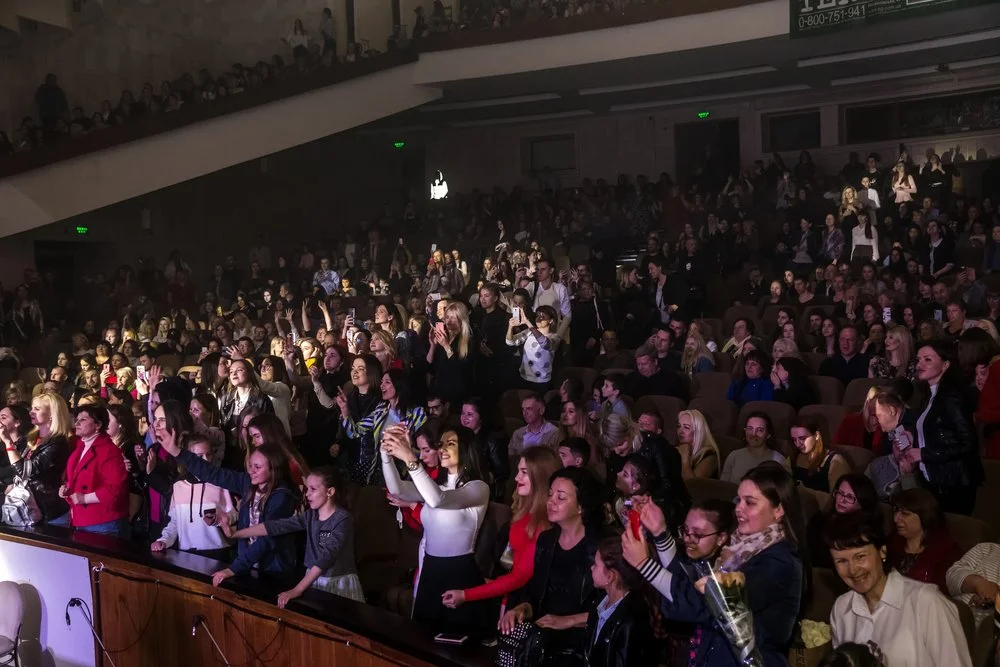
For a while, standing ovations in theatre have sometimes felt automatic. Not always, but often enough that performers, directors, and audience members all started noticing. One section stands, another section follows, and suddenly the person who remains seated can feel like they’re making some kind of silent critique, even if they’re simply clapping from their chair.
In my own experience with community theatre, I’ve seen far more standing ovations that felt automatic than ones that felt truly earned. That is not meant as an insult to the performers. There is a lot of love in those rooms. But because of that, the standing ovation can sometimes become part of the ritual rather than a specific response to what just happened onstage.
In fact, we’ve written about this before. Our writer, Skip Maloney, once stated that standing ovations should only be fore productions that truly deserve it.
But maybe audiences are different from room to room. Maybe some crowds still leap up without hesitation. Maybe it depends on the show, the city, the age of the audience, the ticket price, the mood of the evening, or whether people are waiting to see what everyone else does.
I also think performers are allowed to care about this. Of course they notice. A curtain call is one of the few moments where the audience talks back in real time. Warm applause matters, and a standing ovation matters too, especially when it doesn’t feel automatic.
But I don’t think a seated audience always means an unmoved audience. Some people are deeply engaged and still never stand. Some are so moved they don’t even think to stand. Some simply don’t treat standing as part of their theatre-going habit.
Are you seeing fewer standing ovations lately? Do you stand only when you feel genuinely moved, or do you sometimes stand because the rest of the row is already up?
And for performers: does it still sting when the applause is strong, but everyone stays seated?